

Featured Case Study
Designing ADDIE
Interactive Storyline Experience
A scenario-based Storyline experience that transforms the ADDIE framework into an engaging journey through narrative, exploration, and performance-based learning.
Launch Interactive Demo
Scroll to explore the design process ↓
Timeline
7 Days
Tools
Adobe Creative
Cloud,
Articulate
Engagement
Learning Strategy,
Design &
Development
Deliverable
Interactive
eLearning
Experience
Audience
New
Instructional
Designers
The Design Brief
No template, no proprietary content. Under an hour to complete.
I built this project myself, without relying on any proprietary content, to show that foundational material can be engaging and instructionally sound, right through to a field study that tests application instead of recall. Years of producing live broadcast segments taught me that people remember stories, not slides, so I scripted the recruitment email and mission narrative like a segment: hook first, context second
Create a Meaningful Context
Learning is more memorable when it has meaningful context. Rather than presenting ADDIE as abstract theory, I placed learners in the role of a newly recruited member of a secret organization where understanding the process became essential to completing their first mission.
People remember ideas better when they have a purpose.

Encourage Exploration
Adult learners bring different experiences and prior knowledge. Rather than forcing a linear path, learners could explore content in the order that made the most sense to them while still completing every required learning objective.
Choice increases engagement without sacrificing structure.

Assess Through Application
Instead of ending with a multiple-choice quiz, the course concludes with a field study that requires learners to apply ADDIE to a realistic project. Success depends on applying the process - not simply remembering it.

Performance demonstrates learning better than recall.
Design Principles
Balance Creativity with Learning
Every creative decision supported a learning objective. The narrative, visuals, and interactions were designed to increase engagement without distracting from instruction, creating an experience that was both memorable and effective.

Engagement should reinforce instruction—not compete with it.
Inside the Experience
Recruitment
Orientation
Nonlinear Exploration
Enhancements
Field Study
Instead of opening with objectives and instructions, learners receive a recruitment email inviting them to join the ADDIE organization, mirroring the real challenge of helping someone find their footing before asking them to execute.
Orientation was a deliberate choice because it's where people naturally build foundational understanding. Framing the experience as a new employee orientation made learning the ADDIE framework feel purposeful rather than theoretical.
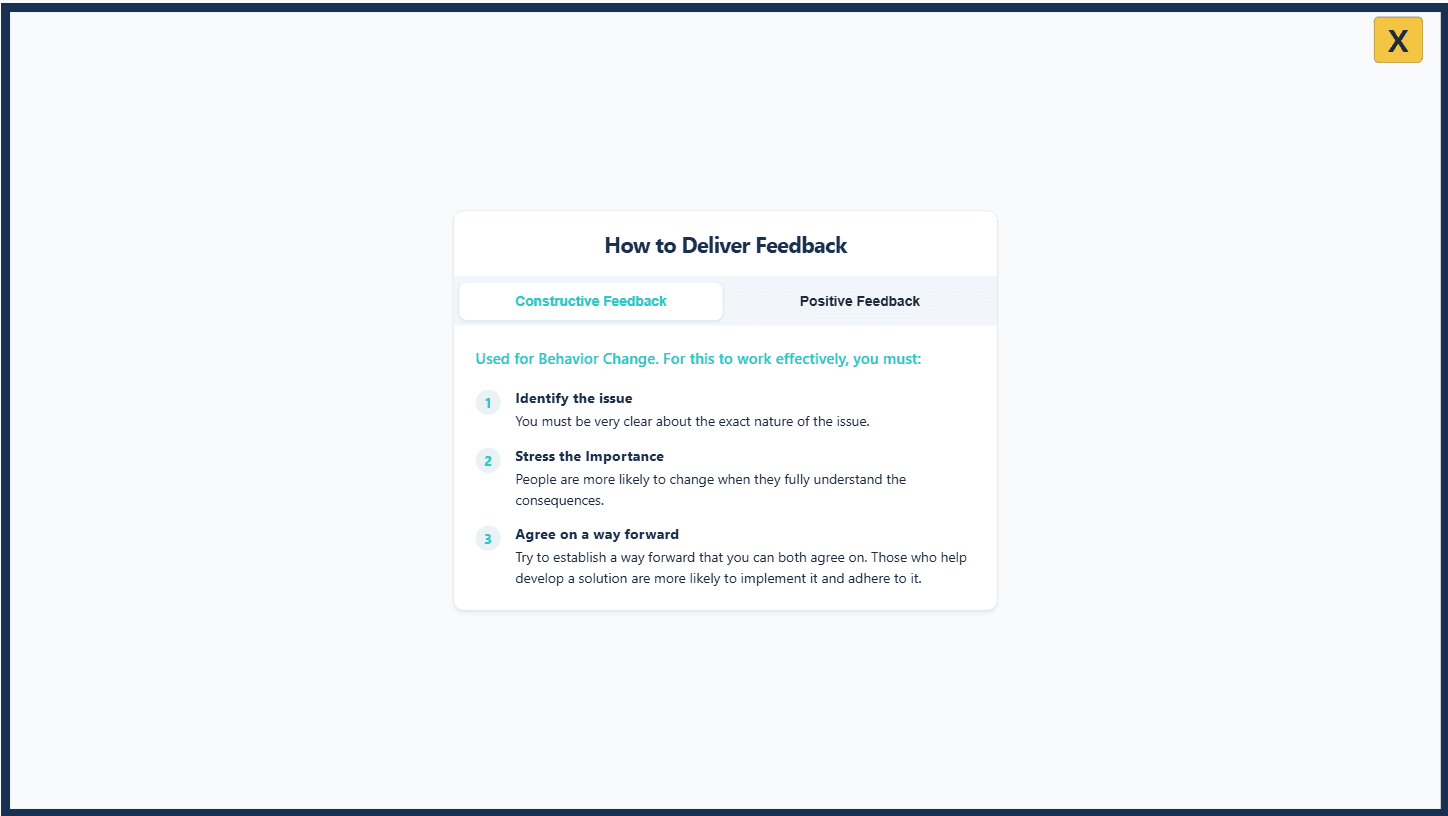
Learners choose where to begin, allowing them to build on prior knowledge while ensuring every concept is completed before advancing. Progress is intentionally gated so learners can choose their own path while still engaging with every required concept before advancing.
Although the original project was completed in seven days, I've continued refining it as my technical and instructional design skills have grown, adding JavaScript personalization, dynamic web objects, and AI-generated narration to deepen the experience.
Rather than completing a multiple-choice quiz, learners finish a field study that requires them to apply the ADDIE process to a realistic design problem. The assessment measures whether learners can use the framework in practice, not simply recognize the correct answer.
Meaningful Context
A Purposeful Onboarding Experience
Learner Choice
Iterative Design
Authentic Assessment



Project Outcomes
Demonstrated how performance-based assessment can reinforce application over memorization.
Performance-Based Learning
Continued refining the experience well beyond its original seven-day window, adding JavaScript personalization, dynamic web objects, and AI narration.
Iterative Improvement
Showcased advanced Storyline development through JavaScript personalization, dynamic web objects, and AI narration.
Advanced Storyline Development
The goal wasn’t to determine whether learners could define ADDIE. It was to determine whether they could apply it.
Reflection & Growth
What I’m Proud Of
An Evolving Learning Experience
What I’d Improve Next
I'm proud that this project didn't take the easy path. It would have been simpler to build a straightforward slide deck with a knowledge check at the end. Instead, I used this project as a chance to prove that foundational content can still be built around narrative, choice, and real application. This is the project I point to when someone asks what 'engaging and instructionally sound' actually looks like in practice.
I don't think of instructional design projects as ever truly 'finished.' Each time I revisit this piece, I'm applying whatever I've learned since: a new tool, a better technique, a sharper eye for pacing. This project has become a kind of running record of my own growth as a designer, and I plan to keep adding to it.
These improvements reflect my belief that effective learning experiences should evolve over time. Rather than treating a project as "finished," I use each iteration as an opportunity to improve usability, increase learner engagement, and apply new techniques as I continue growing as an instructional designer.
While the current experience is highly interactive, there are still opportunities to replace passive moments with richer learner interaction. For example, I plan to redesign the Develop section so learners uncover content by painting the screen rather than reading a list of bullet points. Additional updates will introduce dynamic dates, personalized details, and more contextual interactions to keep the experience feeling current.
